Regional variations of French

GET FRENCH TRANSLATORS AND INTERPRETERS. CALL 080-3753-1249
E-mail: hello@novatiatranslations.com.ng


Regional variations of French

Modern standard French is derived from the variety of French spoken in the area around Paris and the Loire valley area. It is the most important variety of the “northern" group of French dialects, known as the “langues d’oil"; but it is not the only form of French.

In the south of France, particularly in rural areas, there are still people who speak forms of Occitanian French, the “langues d’oc"; these include Provençal, Occitan, and Catalan. Strongly discouraged by central governments for over a century, and considered as “patois" these regional languages were fast disappearing until the nineteen-seventies, when the first significant attempts were made to revive them. Since then, there has been a major increase in awareness of regional languages and cultures in France, illustrated here and there today by road signs and street signs in two languages, and even occasional articles in regional languages in regional newspapers. The status of regional languages, as part of France's cultural heritage, is now enshrined in the French constitution.

However, while people in the Langue d’oc areas of France speak with accents that are distinct from the accents of northerners, and may understand local patois or dialects, only a minority can actually speak or write in non-standard versions of French.

French is also, of course, spoken in countries other than France. It is one of the languages spoken in Switzerland, Belgium, Canada, and a number of other countries. Swiss French and Belgian French are virtually identical to standard French; just a few differences existe. In Belgium and Switzerland, people say septante instead of soixante-dix for 70, and nonante instead of quatre-vingt-dix for 90. Some Belgians also say octante for 80, and the Swiss say huitante for 80. In Canada, Quebec French has kept up several words and expressions that have fallen out of use in modern France; some notable examples are un breuvage instead of une boisson (a drink), or une fournaise instead of une chaudière (stove, boiler).

GET FRENCH TRANSLATORS AND INTERPRETERS. CALL 080-3753-1249
E-mail: hello@novatiatranslations.com.ng
Franglais, and the influence of English

GET FRENCH TRANSLATORS AND INTERPRETERS. CALL 080-3753-1249, 081-1445-6164
E-mail: hello@novatiatranslations.com.ng

Franglais, and the influence of English

Nevertheless, though both the Academy and the French government have attempted on numerous occasions to preserve the perceived “purity" of French, modern French has been heavily influenced by English – or rather, by American – and thousands of English words have been brought into French by journalists, scientists, travellers, musicians, showbiz personalities, films, and street culture. Television chat-show hosts and their guests, businessmen and stars of all sorts pepper their French with words of English origin, which at first are quite incomprehensible to ordinary French speakers. This type of talk is known as “Franglais". One recent example, heard in a business context, is “une to-do liste" , which appears to have entered the French language in around 2007. Words like “le shopping" or “un parking" or “le hard discount" are now so well established in modern French that many French speakers do not even realise that they are borrowed from English.
Anti “Franglais" measures have had a few successes or half successes. After “un pipeline" entered the French language in the 1960s, the Academy banished the word, decreeing that the French word for an oil pipeline was “un oléoduc": and that is the word now used. But attempts to banish “email" have met with less success, and the purist’s alternative, “un courriel" has only managed to establish itself as an acceptable alternative to “email", used notably in official communications.

Among the reasons that have helped English make inroads into many languages is the ease with which English forms new words or adapts existing words to create new ones. Although French is a "synthetic" language (i.e. a language that makes great use of inflections - prefixes and grammatical endings ) it does not adapt words to create new meanings with the ease that English does. Just look at the complexity of the expression required to render the English word "anticlockwise" in French... dans le sens inverse des aiguilles d'une montre. Surprisingly perhaps, the English word in this particular case has not entered the French language in spite of its relative simplicity. This is no doubt because it is not everyday vocabulary, not an erudite technical term.

GET FRENCH TRANSLATORS AND INTERPRETERS. CALL 080-3753-1249, 081-1445-6164
E-mail: hello@novatiatranslations.com.ng

French language

GET FRENCH TRANSLATORS AND INTERPRETERS. CALL 080-3753-1249, 081-1445-6164
e-mail: hello@novatiatranslations.com.ng

French is one of the world’s major languages. It is a main or official language not just in France, but in parts of Belgium and Switzerland, in Monaco, in parts of Canada – notably but not only in Quebec – as well as being widely spoken in north and west Africa, Lebanon, and parts of south-east Asia, particularly in former French colonies. It is an official or a main second language in 55 countries worldwide, and is reputed to be the foreign language which is most widely used in international communications, after English. Almost 300 million people speak French as their native language or as a second language.

Until the early twentieth century, French was the language of diplomacy, and one of the two main languages of international negotiation; today it is one of the six official languages of the United Nations, and one of the two official languages, with English, of the International Postal Union, of the International Olympic Committee, the International Red Cross, and other organisations. It is also an official language in the Channel Islands of Jersey and Guernsey.

History of French through the centuries
A “Romance" language, modern French is derived from Latin (as are Italian, Spanish, Portuguese and some other Mediterranean languages). Mediaeval French was one of the main historic roots of modern English, notably in terms of vocabulary.

Like all languages, French has evolved considerably in the course of time; the oldest known document written in a form of French, rather than late Latin, is the “Serments de Strasbourg", written in the year 842. In Mediaeval times, different forms of French flourished as the language of literature in both France and England: famous works from the time include the “Chansons de geste" (Songs of chivalry), notably the epic “Chanson de Roland", the Roman de la Rose (the Romance of the Rose), and the Arthurian legends (many written in French in England). By the time of the Renaissance, French had evolved to a point where writers such as Rabelais and Ronsard were writing in a language that is still quite comprehensible to a modern day educated reader; as for the great writers of seventeenth century France, Molière, Corneille and Racine, they remain quite understandable to this day.

Yet in recent centuries, change has been slower than with English, on account of the French Academy, the Académie Française, one of whose remits is to act as guardian of the French language. The Academy has frequently resisted changes to the French language, insisting that existing and traditional forms of the language were, by virtue of their existence, “correct French".

GET FRENCH TRANSLATORS AND INTERPRETERS. CALL 080-3753-1249, 081-1445-6164
e-mail: hello@novatiatranslations.com.ng

City Tutors NG Launches State Alternative Education Project (SAEP) in Nigeria

City tutors NG has finally launched the State Alternative Education Project in Nigeria. This is a pioneering revolution project in the educational system through academic and behavioral supports and interventions, case management, psychological training, supervision, learning strategies and approaches that strengthen and explore the possibilities not available within the traditional mainstream education .

This project creates multiple and expanded pathways to assist students having difficulties within the school systems, including those who are at the risk of dropping out of schools and providing well-lit re-entry points for those who are out of the traditional school system.

SAEP provides menus of education options to strengthen the existing education structures. Offering students who are struggling or who have left school an opportunity to achieve in a new setting and use creative, individualized learning strategies and flexible schedules.

Due to our flexible structure, we are open to collaboration, partnerships and sponsorship. let's have a chat. Call us on 0803-753-1249, 0809-354-6555.


ipad-606764_1280

Enrolment of City tutors NG International Tutor Certificate Course (ITCC) for tutoring agencies and Businesses in Nigeria

International Tutor Certificate Course (ITCC)  is a DLHT certified programme aimed at improving the standard of tutoring in Nigeria and West African sub-region, promoting professionalism at both individual and corporate level.  Successful participants will become Accredited and certified tutors and will be authorized to use AACT designation in front of their names.

This Certificate Programme consists of 10 modules.
It is a very educative programme and each module will have a formative and summative assessment. These assessments will be written, verbal and based on observations.

There are three options for learning:

  • A  two day Intensive Programme
  • A One Weekend Programme
  • Online based learning and assessment(includes viewing tutor training videos )

CONTENT
Key areas to be covered in the International Tutor Certificate Programme include:

  • Basic tutor guidelines
  • The basic Tutoring “Do’s” and “Don’ts”
  • Strategies for Subject Knowledge for Tutors
  • Analysis of Student Types and Learning Styles
  • Diagnosis and Management of Student
  • Types and Learning Styles
  • Strategies for Efficient Delivery
  • Techniques of Constructive Feedback
  • Role modeling
  • Active Listening and paraphrasing
  • Compliance with the Ethics, professionalism  and Philosophy of individualized tuition
  • Techniques for successfully beginning and ending a Tutoring session
  • Critical thinking skills

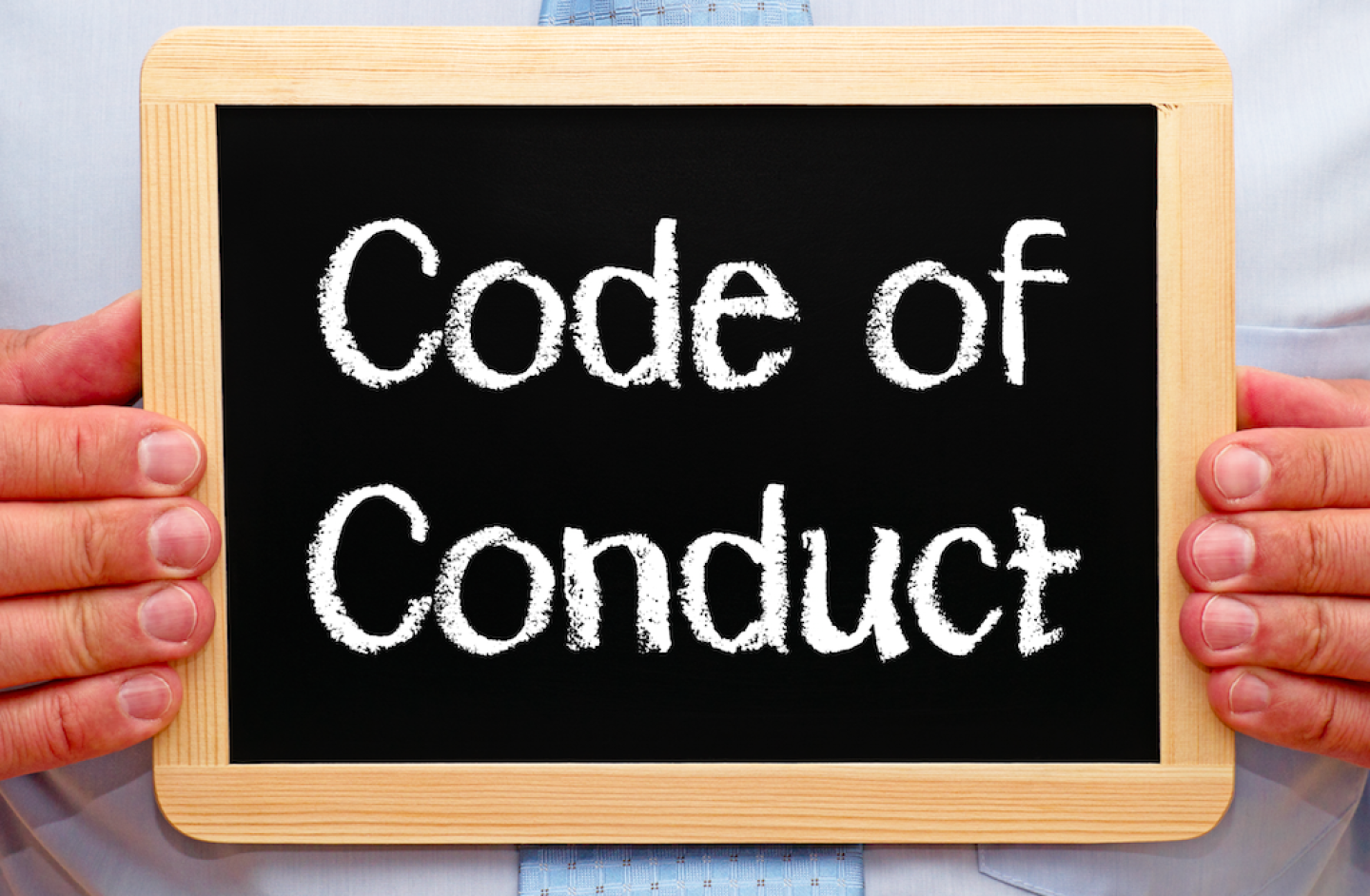
Heralding 'Our Standard Code of Conduct for Tutors' for efficient service delivery

We do not compromise integrity and character to get results, our tutors have the both professional and character development skills to help our students for a great future.It is a requirement of membership for individual tutors that they adhere to the following Code of ethics. Corporate members also have a responsibility to promote regard for the ‘Our Standard Code of conduct for tutors’ . Our corporate members are responsible for monitoring whether tutors with whom they work honour the code.

  1. I understand that my role as a tutor is to encourage and enable pupils to achieve their unique potential as independent learners through acknowledgement, encouragement, understanding, and personalised attention.
  2. I will be careful to avoid engaging in any practice that undermines the independent learning of our students
  3. I will not engage in any form of plagiarism, such as completing pupils’ homework assignments for them.
  4. I will demonstrate faith in my pupils’ learning ability and provide honest, positive and constructive feedback.
  5. I understand the need to be flexible in my approach to tutoring to assist my pupils in discovering effective learning strategies.
  6. I undertake to keep up-to-date with advances in subject knowledge and pedagogy.
  7. I undertake to comply with the UN Child Protection Policy.
  8. I am committed to identifying any particular challenges or difficulties my pupils might have with their learning and to assisting them in overcoming those barriers.
  9. I will share with my home education support manager any concerns I have about pupils’ social, emotional and behavioural difficulties that are beyond my competency to address.
  10. I will identify to my home education support manager any special educational needs that are beyond my experience or ability to resolve, in order that they may secure for them the right kind of specialist help from the team at City tutors NG.
  11. I understand that my relationship to my pupils is professional and not personal and that I have a duty of care towards them.
  12. I will keep information about the pupil whom I am assigned confidential, unless doing so would be to result in injury or harm being done to them.
  13. I will show respect for my pupils’ cultural background, personal dignity and values.
  14. I will maintain accurate records of tutoring sessions as expected and required.
  15. I will respect the terms and conditions of my contract, and in particular, will not seek to provide educational services to pupils I have been introduced to in this way independently of the company.


Lagos Office

  • Suite 3AB, Fish House Plaza 34/36 Ikorodu road, Jibowu, Lagos
  • 0803-753-1249, 0705-985-6968
  • info@citytutors.com.ng

Abuja Office

  • Suite 203, 2nd Floor Obum Place, Plot 1140 No 16 Ademola Adetokunbo crescent, Wuse 2, Abuja, Nigeria.
  • 08147402857
  • info@citytutors.com.ng

Port Harcourt

  • Chukwu-Agholu Avenue, Rumuagholu Road, off Rumuokoro Roundabout, Port Harcourt, Nigeria.
  • 0705-985-6968
  • info@citytutors.com.ng

We Are Social

Copyright 2020 CITY TUTORS LIMITED©  All Rights Reserved | Terms & Conditions   

×

Powered by WhatsApp Chat

× CHAT ON WHATSAPP